

Nannapaneni Maneesh
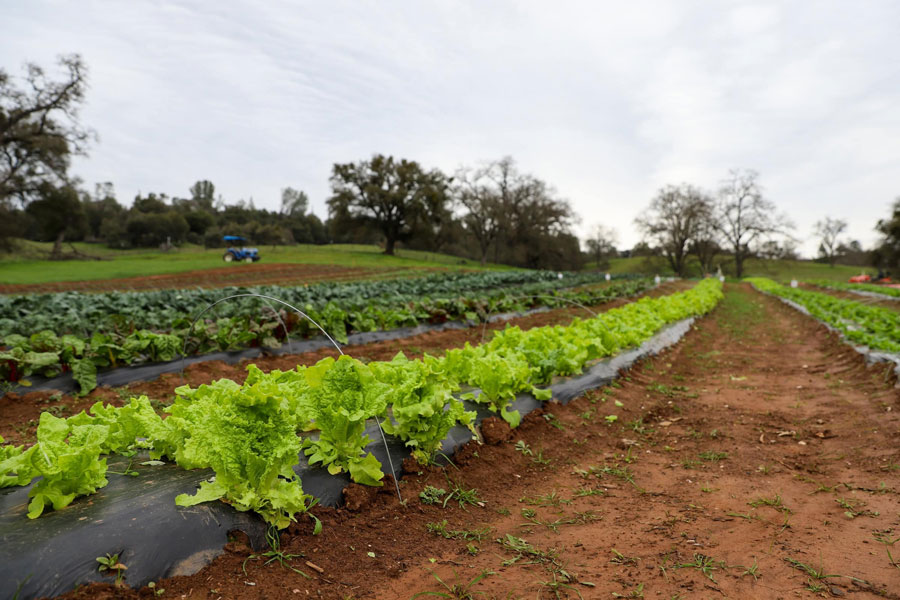
A narrow strip of zinnias blooms along the middle of a vegetable field in Rayalaseema region in Andhra Pradesh. Bees move from flower to flower before disappearing among the vegetable plants. Hoverflies pause in the morning light, while a ladybird beetle searches beneath a leaf where aphids have gathered. Between two chilli plants, a spider waits in a web that becomes visible only when sunlight catches its threads. A few steps away, an old cotton saree covers a raised bed. Beneath it, the soil is cool, dark and moist. Outside the cloth, the exposed soil has begun to harden under the summer heat. None of these would appear in a farmer’s harvest record. The bee will not be weighed; the spider will not be sold and the fungi living beneath the soil will never feature in a production report.
Yet they are part of the harvest
Across the dry landscapes of Rayalaseema, farmers are experimenting with ways to bring some of these ecological relationships back into their fields. Flower borders, companion crops, farm ponds, trees, staggered planting and even discarded cotton sarees are being used alongside vegetable cultivation. These practices may appear unrelated. Together, however, they address a larger question: how can a farm create the ecological conditions that allow crops to thrive?
What a farm leaves out
Modern agriculture has become highly skilled at designing production. Seeds are selected for specific conditions, and irrigation is calculated according to crop requirements. Similarly, nutrients are applied based on recommendations and expected yields are estimated before harvest.
But a farm is more than its crop
Where will pollinators find food before the vegetables begin flowering? Where will beneficial insects survive after the crop is harvested? Where will birds perch? How will soil organisms survive months of intense heat? Where will rainwater slow down instead of running off?
Such questions are rarely part of a conventional farm plan
As agricultural landscapes have become increasingly simplified, trees have disappeared from field boundaries, flowering plants have been removed, and bare soil has become common. Habitats have become fragmented. Some of the ecological functions lost in the process have been replaced with external inputs such as fertilisers for nutrients, pesticides for pest control and plastic sheets for ground cover. These interventions can address immediate problems. But rebuilding ecological relationships can make farms less dependent on replacing every function of nature with an external input.
A flowering border, for instance, can provide food and shelter for pollinators and beneficial insects. A tree can offer shade, organic matter and habitat. Ground cover can reduce soil temperature and conserve moisture. A pond can provide irrigation while creating a refuge for birds, insects and other organisms. The crop remains at the centre of the farm. But it no longer stands alone.
Two landscapes, one lesson
The idea is not new.
Years earlier, organic vegetable farms in France used ponds, fruit trees, companion crops, flowering herbs and staggered planting to create diverse farm landscapes. In Rayalaseema, farmers are adapting some of the same principles to a very different climate and farming system. The similarity lies less in the techniques than in what they are trying to achieve: keeping different forms of life connected within the farm.
Farmers working with WASSAN have been experimenting with such approaches in vegetable fields. Flowering plants are grown along field edges, crops are combined to create greater diversity, planting is staggered so that different plants flower at different times, and organic materials are used to protect soil from heat and moisture loss. For farmers in a dry region, these are practical concerns. Soil that retains moisture can reduce stress on crops. Flowering plants can attract pollinators. Habitat for spiders and other predators can help regulate insect populations. Ecological diversity therefore becomes more than a conservation goal. It becomes part of the farming system.
There were trees on every bund
One summer afternoon, beneath the shade of a tamarind tree, a group of elderly farmers recalled how farming had changed during their lifetime. Venkataramana, 79, looked across the fields and said, “When I was young, there were trees on every bund.” He remembered birds nesting in those trees and feeding on insects in the fields. Flood irrigation created small pools where birds drank and bees gathered. Fruit trees, vegetables and wildflowers meant that something was often in bloom.
Families also grew a range of vegetables, pulses and oilseeds. The purpose was not to increase biodiversity as a measurable outcome. It was simply how farming and household food needs were organised. His recollections point to something that has increasingly become a subject of scientific and agricultural interest: farms function best when different elements support one another. Trees provide habitat. Flowers provide food for pollinators. Birds and predatory insects can help regulate pests. Plant residues feed soil organisms. Water bodies support life beyond irrigation. The farmer may manage these elements separately, but their functions are interconnected.
Designing for life
This changes the way a farm can be planned. A pond can be designed not merely as an irrigation reservoir but as habitat. A fruit tree can be retained for more than its produce. Flowering borders can be planned to ensure that pollinators have food beyond the crop’s flowering period. Companion crops can provide shade, habitat or barriers to pests. Even an old cotton saree spread across a vegetable bed can have an ecological role. By shielding the soil from direct sunlight, it helps retain moisture and moderate soil temperature, creating better conditions for organisms living beneath the surface. None of these interventions is a substitute for good farming. Nor can ecological design eliminate drought, pests or market uncertainty. It creates a farm that is better able to respond to those uncertainties. The principle is simple. The farmer does not have to replace every ecological function with a purchased input if the farm itself can support some of those functions.
The harvest before the harvest
The vegetables harvested from a field are the most visible outcome of farming. The less visible processes that make them possible begin much earlier. Pollinators need food before the crop flowers. Predatory insects need habitat before pests appear. Soil organisms need moisture and organic matter before roots begin drawing nutrients. Birds need trees and other places to shelter throughout the year. These relationships rarely appear in calculations of yield. Yet they determine how a field performs over time. For farmers in Rayalaseema, restoring them does not necessarily mean returning to an earlier form of agriculture. It means adapting ecological principles to present-day conditions such as using whatever resources and knowledge to create more diverse and resilient farms. A productive farm, therefore, is not simply one that produces vegetables. It is one that keeps the conditions for future harvests alive.
The vegetables may leave the field after harvest. The bees, spiders, birds, fungi, earthworms and soil organisms remain. And long after one crop has been harvested, they continue preparing the ground for the next. That is the harvest before the harvest.
Views expressed are the author’s own and don’t necessarily reflect those of Eco Matrix Intelligence
