
Close Menu
    • Agriculture
    • Horticulture
    • Nursery
    • Landscaping
    • Student Corner
    • Personality
    • eMagazine
    • Our Team
    Facebook X (Twitter) Instagram
    Saturday, September 12
    • Home
    • About Us
    • Privacy Policy
    • Terms and Conditions
    • Contact Us
    Facebook X (Twitter) Instagram
    Eco Matrix Intelligence Magazine
    • Agriculture
    • Horticulture
    • Nursery
    • Landscaping
    • Student Corner
    • Personality
    • eMagazine
    • Our Team
    Eco Matrix Intelligence Magazine
    • Agriculture
    • Horticulture
    • Nursery
    • Landscaping
    • Student Corner
    • Personality
    • eMagazine
    • Our Team

    5 plants you should never buy from a nursery: What to check before bringing them home

    EcoMatrix IntelligenceBy EcoMatrix IntelligenceSeptember 12, 20261 Views

    A trip to the local nursery has a way of turning into an impulse purchase, a pretty flowering vine here, a lush green groundcover there, all picked up without much thought beyond how good it’ll look in the garden. What most buyers don’t realise is that several genuinely popular, widely available nursery plants come with a real environmental cost, spreading aggressively beyond where they’re planted, choking out native species, or quietly taking over water bodies and forest land across India. Nurseries rarely mention this on the price tag. Here are five plants worth thinking twice about before you add them to your cart.

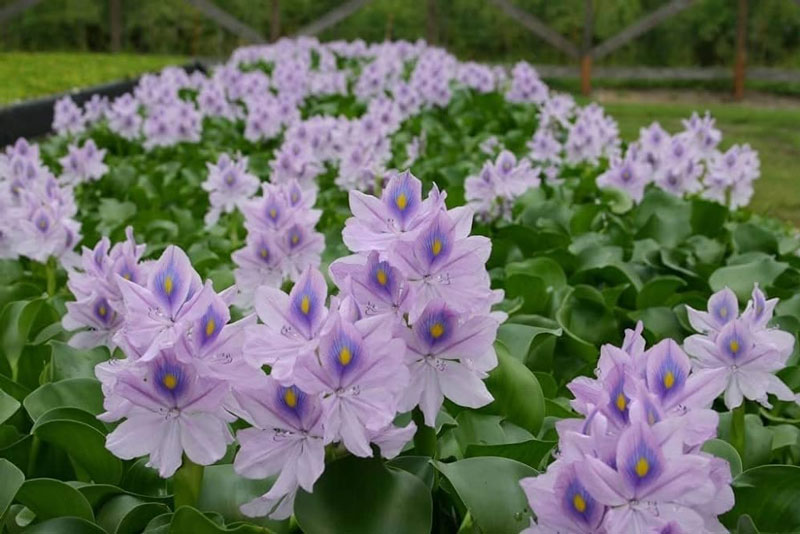
    Water hyacinth
    Sold widely for ponds, water features, and aquariums for its attractive purple flowers and glossy leaves, water hyacinth is genuinely one of India’s most damaging invasive aquatic plants. It reproduces astonishingly fast, forming dense mats that choke lakes and rivers across the country, from Bengaluru’s urban lakes to Kerala’s backwaters, blocking sunlight from reaching aquatic life below, depleting oxygen levels as it decomposes, and even obstructing boats and drainage systems. What looks like a harmless decorative pond plant can escape into local waterways with alarming speed, and once established, it’s notoriously difficult to fully remove.

    Running bamboo
    Bamboo is a nursery favourite for quick, dense privacy screens, but not all bamboo behaves the same way once planted. Running varieties spread aggressively underground through rhizomes that can travel metres away from the original plant, popping up in a neighbour’s garden or cracking through paved paths and building foundations. Unlike clumping bamboo, which grows in a contained, manageable clump, running varieties are genuinely difficult to control once established, and nurseries don’t always clearly distinguish between the two types when selling them.

    Lantana camara
    This one comes with a genuine contradiction worth understanding properly. Lantana is commonly sold as a hardy, colourful, low-maintenance flowering plant, and it genuinely is easy to grow, but it’s also officially recognised as one of the world’s most damaging invasive species, having spread through Indian forests and grasslands so extensively that it now displaces native vegetation across large stretches of protected wildlife habitat. Kept contained in a pot or a clearly bordered garden bed, it’s manageable, but planted loosely in open ground near natural areas, it can escape and spread with real ecological consequences.

    Mint, planted directly in the ground
    Mint feels like an obviously safe, useful herb to pick up at a nursery, until it’s been in your garden bed for a season and has quietly spread well beyond where you originally planted it. Its underground rhizomes travel aggressively, popping up metres away and crowding out other plants nearby, which is precisely why experienced gardeners almost always recommend growing it in a contained pot rather than directly in open garden soil, regardless of how harmless it looks sitting in its little nursery container.

    Money plant, planted outdoors in the ground
    As a houseplant in a pot, money plant, or pothos, is genuinely one of the easiest, most forgiving plants around. The concern arises specifically when it’s planted outdoors in tropical and subtropical climates, where its trailing vines can root wherever they touch soil and climb aggressively up trees and structures, escaping cultivation and spreading into surrounding vegetation. It’s a plant far better kept contained indoors or in a hanging pot than given free rein in an open garden bed in India’s climate.

    Share. Facebook Twitter LinkedIn WhatsApp
    EcoMatrix Intelligence

    Related Posts

    Nursery

    85,000 Plants Spell Out ‘Vande Mataram’ in Kadiyam Nursery

    September 12, 2026
    Nursery

    J&K farmers seek comprehensive policy to promote commercial floriculture

    September 12, 2026
    Nursery

    Maharashtra farmer grows roses and other flowers on just one acre

    September 12, 2026
    Nursery

    Delhi gets pretty with lights, flowers, signages for BRICS

    September 12, 2026
    Nursery

    A small trial blooms into a Flower farm

    September 12, 2026
    Nursery

    For a sector to flower: Tapping India’s vast floriculture opportunities

    September 12, 2026
    Add A Comment
    Leave A Reply Cancel Reply

    Top Posts

    Delhi gets pretty with lights, flowers, signages for BRICS

    September 12, 20263 Views

    A small trial blooms into a Flower farm

    September 12, 20262 Views

    For a sector to flower: Tapping India’s vast floriculture opportunities

    September 12, 20262 Views

    5 plants you should never buy from a nursery: What to check before bringing them home

    September 12, 20261 Views
    Don't Miss

    85,000 Plants Spell Out ‘Vande Mataram’ in Kadiyam Nursery

    By EcoMatrix IntelligenceSeptember 12, 20260

    Nursery farmers in Kadiyam of East Godavari district created a unique Independence Day tribute by…

    5 plants you should never buy from a nursery: What to check before bringing them home

    September 12, 2026

    J&K farmers seek comprehensive policy to promote commercial floriculture

    September 12, 2026

    Maharashtra farmer grows roses and other flowers on just one acre

    September 12, 2026
    Stay In Touch
    • Facebook
    • Twitter
    • Instagram
    • YouTube
    About Us
    About Us

    A National Agriculture and Horticulture Magazine

    Dedicated to students, farmers, nurserymen, landscape architect and researcher

    Facebook X (Twitter) Instagram YouTube WhatsApp
    Latest Update

    85,000 Plants Spell Out ‘Vande Mataram’ in Kadiyam Nursery

    September 12, 2026

    5 plants you should never buy from a nursery: What to check before bringing them home

    September 12, 2026

    J&K farmers seek comprehensive policy to promote commercial floriculture

    September 12, 2026
    Most Popular

    The harvest before the harvest

    September 12, 20260 Views

    Rains have been so plentiful in drought-prone Bundelkhand that kharif crops have suffered; but there is hope for the rabi season

    September 12, 20260 Views

    India’s protein demand set to triple by 2070: Emissions could soar, but the transition won’t look like West’s

    September 12, 20260 Views
    © 2026 www.ecomatrixintelligence.in
    • Home
    • About Us
    • Privacy Policy
    • Terms and Conditions
    • Contact Us

    Type above and press Enter to search. Press Esc to cancel.