

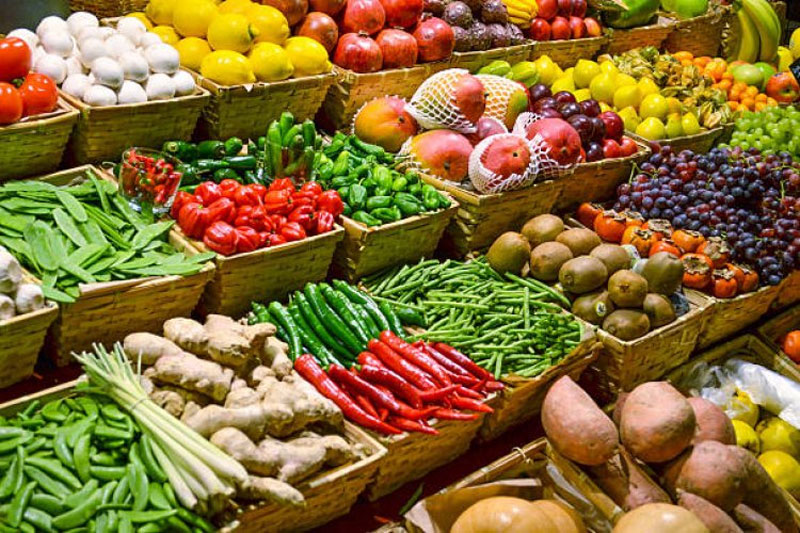
To cut down on India’s growing dependence on specific horticulture imports despite rising domestic production and for raising its share in global exports, the National Academy of Agricultural Sciences (NAAS), in a recent policy paper, strongly advocated a slew of measures. These include strengthening the breeding programme for horticulture crops and acquiring improved varieties and hybrids of import-dependent horticulture crops like apples, walnuts, hazelnuts and kiwi fruits, among others. It also called for streamlining the registration and regulation of pesticides to address the limited options for medicinal and aromatic plant protection. The paper suggested developing special sea route protocols for long-duration consignments of important fruits and focusing on processing value-added products with high export demand. NAAS is chaired by director general of Indian Council for Agricultural Research ML Jat.
“A peculiar shift has been occurring in the horticultural trade wherein despite rising production of horticultural products, imports of fresh fruits and spices have seen a rise in the past few years,” the paper said. For example, spice imports increased almost 18 per cent within the past five years, from ₹101.87 billion in 2019-20 to ₹120.51 billion in 2023-24. This represents a compound annual growth rate (CAGR) of 6.4 per cent. The key import items include pepper, clove, spice oils and oleoresins, and mint products. “The import budget on fresh fruits (consisting of apples, oranges, grapes, kiwis and cherries, among others) increased 8-fold in the past 15 years from ₹28.43 billion in 2009-10 to ₹226.64 billion in 2023-24,” the paper said. It added that this divergence between demand and actual production encapsulates the core of horticulture’s production paradox. “An attempt should be made to reduce import dependency by boosting domestic production, reducing post-harvest losses, and providing support to farmers under various schemes to build a capacity for Atmanirbhar horticulture,” the paper added. It also said despite being the leading producer of fruits and vegetables, India’s exports in the global market are low. “India exported horticultural products of ₹92,532 crore during TE 2024-25 in which spices contributed to about two-fifths of the total export value (38 per cent), followed by plantation crops (29.4 per cent), processed horticultural products (13.9 per cent), fresh fruits (8.8 per cent), and fresh vegetables (7.9 per cent). Seeds of horticulture and floriculture crops accounted for about 1 per cent (each) in total exports,” the report said. The major fruits exported include mangoes, bananas, grapes and pomegranates, among others, in 2024-25.
Among the major vegetables exported from India are onion, tomatoes, potatoes, beans, garlic, okra and green chillies. During 2024-25, India exported horti-products to more than 100 countries, including China, the US, Bangladesh, the UAE, Thailand, Malaysia, Indonesia, the UK and Sri Lanka.
Major regions where fresh fruits were exported in recent years include West Asia, Europe, and Asia. The major destinations for fresh vegetables were the UAE, Nepal, Bangladesh, Malaysia, Sri Lanka, the UK, Oman and Iraq. Meanwhile, among measures, recommended by NAAS in the policy paper included promoting a sustainable, efficient and safe production system aligned with global concerns for food safety and traceability, strengthening the traceability systems across the value chain, including organic produce to assure food safety and sustainability, promoting linkages with food, pharmaceutical and cosmetic industry partnership for developing innovative uses of horticulture-based processed and value-added products.
The paper also advocated, establishment of procurement and collection centres in major horticultural production clusters to streamline aggregation and export of produce, similar to organized marketing arrangements adopted in countries such as Taiwan and exploring of new destinations for horticultural export to reduce the dependency on traditional destinations and future risks. “As hybrid seed production is costly in many countries, India can serve as a key supplier for importing countries. Leverage India’s strength as a major hub for vegetable hybrid seed production particularly for solanaceous vegetables and cucurbits by simplifying export policy to promote seed exports,” the paper said.
It also suggested that a platform for information exchange among different ministries, commodity boards (i.e. spices board, turmeric board, coconut development board, tea board, coffee board, etc.), APEDA, National Horticulture Board (NHB), CSIR institutes, Agricultural Universities, private institutions, FPOs/FPCs etc should be established.
