
Close Menu
    • Agriculture
    • Horticulture
    • Nursery
    • Landscaping
    • Student Corner
    • Personality
    • eMagazine
    • Our Team
    Facebook X (Twitter) Instagram
    Saturday, September 12
    • Home
    • About Us
    • Privacy Policy
    • Terms and Conditions
    • Contact Us
    Facebook X (Twitter) Instagram
    Eco Matrix Intelligence Magazine
    • Agriculture
    • Horticulture
    • Nursery
    • Landscaping
    • Student Corner
    • Personality
    • eMagazine
    • Our Team
    Eco Matrix Intelligence Magazine
    • Agriculture
    • Horticulture
    • Nursery
    • Landscaping
    • Student Corner
    • Personality
    • eMagazine
    • Our Team

    Rains have been so plentiful in drought-prone Bundelkhand that kharif crops have suffered; but there is hope for the rabi season

    EcoMatrix IntelligenceBy EcoMatrix IntelligenceSeptember 12, 20260 Views

    Bhagirath

    The drought-prone Bundelkhand region of Uttar Pradesh has received plentiful rains this year. And while farmers’ kharif crops have suffered, there is hope for the winter (rabi) crop. According to the India Meteorological Department (IMD), Mahoba received 948 mm of rainfall, which is 76 per cent more than the normal rainfall, till September 8, 2026, against the normal of 537 mm. Mahoba is tied with Chitrakoot in Bundelkhand for the highest rainfall in the whole of Uttar Pradesh after Sambhal (89 per cent). Chitrakoot also recorded 76 per cent more rainfall, receiving 1,202 mm of rainfall against the normal of 684 mm.

    Of the five districts in Uttar Pradesh that received more than 1,000 mm of rainfall, three are from the Bundelkhand region. These include Banda, Chitrakoot and Hamirpur. Banda received 1,114 mm of rainfall, Chitrakoot 1,202 mm and Hamirpur 1,026 mm of rainfall. Of the other districts of the Bundelkhand region that fall in Uttar Pradesh (it straddles Uttar Pradesh and Madhya Pradesh), Lalitpur received 24 per cent and Jalaun 21 per cent excess rainfall. However, the situation is different in Jhansi. It has recorded 14 per cent less rainfall than normal. The plentiful rain caused most of Bundelkhand’s ponds, for which the region is famous, to be completely filled, and many are beginning to overflow.

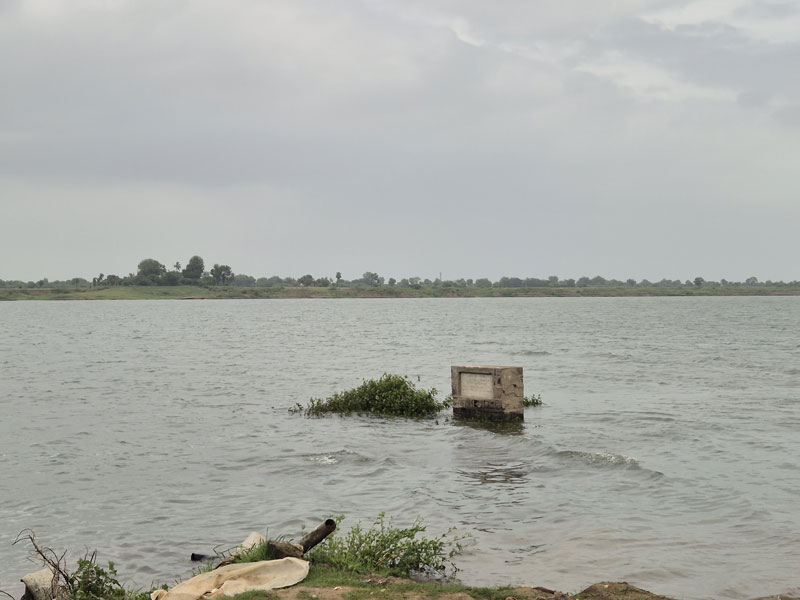
    In Mahoba district, all the Chandel-era ponds, built nearly 1,000 years ago, are now brimming. For the past several days, the main pond, Kirat Sagar, has been overflowing, flooding its lower reaches. Prem Singh, a progressive farmer in Banda district, told Down To Earth that the monsoon has become extremely unpredictable. Farmers are having a difficult time deciding which crops to sow. He explained that there were indications of less rainfall at the beginning of the monsoon this year. Due to this uncertainity, at least 50 per cent of farmers did not sow paddy.
    Bundelkhand is known for its oilseed and pulse crops. During the monsoon, sesame, peanuts, sorghum, black gram, and in some areas, cotton are cultivated. According to Singh, all these crops have been completely destroyed. Only rice has survived, and if rains occur in September, when the rice is fully grown, it will also suffer significant losses.

    However, Rajkumar Chaurasia, a betel farmer in Mahoba and vice-president of the Chaurasia Samaj Seva Samiti, considers this monsoon rain to be good for the rabi crop and says that it will definitely result in a better harvest.
    According to Chaurasia, it is after a decade that he has seen so much rain in Mahoba; so much that the ponds of the Chandel period have been filled to the brim and are overflowing. He explained that these ponds were built in such a way that when one pond was filled, the excess water would go to the other pond. Kirat Sagar is the last pond in this chain which is now completely filled. Its water kept overflowing and flowing onto the roads for several days.

    According to Ashok Nigam, a senior journalist living in Banda, excessive rainfall flooded village roads and blocked drainage channels, causing a large number of mud houses to collapse. He noted that this excessive rainfall is what caused the historic flood in Chitrakoot. The Mandakini river was flowing 9 metres above the danger mark. This had never happened before. The river has flooded before, but it was typically 3 to 3.5 metres above the danger mark.

    Share. Facebook Twitter LinkedIn WhatsApp
    EcoMatrix Intelligence

    Related Posts

    Agriculture

    Who will grow India’s food in the future?

    September 12, 2026
    Agriculture

    India to upgrade 300 Krishi Vigyan Kendras even as old gaps in staffing and funds remain

    September 12, 2026
    Agriculture

    India’s protein demand set to triple by 2070: Emissions could soar, but the transition won’t look like West’s

    September 12, 2026
    Agriculture

    The harvest before the harvest

    September 12, 2026
    Add A Comment
    Leave A Reply Cancel Reply

    Top Posts

    Delhi gets pretty with lights, flowers, signages for BRICS

    September 12, 20263 Views

    A small trial blooms into a Flower farm

    September 12, 20262 Views

    For a sector to flower: Tapping India’s vast floriculture opportunities

    September 12, 20262 Views

    5 plants you should never buy from a nursery: What to check before bringing them home

    September 12, 20261 Views
    Don't Miss

    85,000 Plants Spell Out ‘Vande Mataram’ in Kadiyam Nursery

    By EcoMatrix IntelligenceSeptember 12, 20260

    Nursery farmers in Kadiyam of East Godavari district created a unique Independence Day tribute by…

    5 plants you should never buy from a nursery: What to check before bringing them home

    September 12, 2026

    J&K farmers seek comprehensive policy to promote commercial floriculture

    September 12, 2026

    Maharashtra farmer grows roses and other flowers on just one acre

    September 12, 2026
    Stay In Touch
    • Facebook
    • Twitter
    • Instagram
    • YouTube
    About Us
    About Us

    A National Agriculture and Horticulture Magazine

    Dedicated to students, farmers, nurserymen, landscape architect and researcher

    Facebook X (Twitter) Instagram YouTube WhatsApp
    Latest Update

    85,000 Plants Spell Out ‘Vande Mataram’ in Kadiyam Nursery

    September 12, 2026

    5 plants you should never buy from a nursery: What to check before bringing them home

    September 12, 2026

    J&K farmers seek comprehensive policy to promote commercial floriculture

    September 12, 2026
    Most Popular

    The harvest before the harvest

    September 12, 20260 Views

    Rains have been so plentiful in drought-prone Bundelkhand that kharif crops have suffered; but there is hope for the rabi season

    September 12, 20260 Views

    India’s protein demand set to triple by 2070: Emissions could soar, but the transition won’t look like West’s

    September 12, 20260 Views
    © 2026 www.ecomatrixintelligence.in
    • Home
    • About Us
    • Privacy Policy
    • Terms and Conditions
    • Contact Us

    Type above and press Enter to search. Press Esc to cancel.